
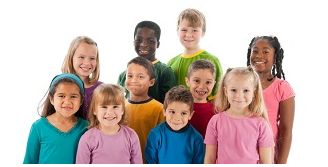
Of All God’s Creation, His Children are His Greatest Glory

“Where is the newborn king of the Jews?
We saw his star at its rising
and have come to do him homage.”
—Matthew 2:2
The second chapter of Matthew’s Gospel describes the story of the Wise Men following the star in the East to the place where they would find the newborn Prince of Peace. The word Epiphany has its roots in Greek and means manifestation or striking appearance. Thus, the origins of the feast from the third century Eastern Church, marks the celebration of how Jesus Christ, born in a lowly manger—a helpless child, was made manifest to the Gentiles as Savior of the World.
Traditionally this revelation was made in four distinct ways:
- Through the persons of the Magi;
- By the baptism of Jesus;
- In the first miracle at the wedding feast of Cana; and
- Through the birth of Christ, which also was included in the Feast of Epiphany.
(Martindale, C.C. (1909). Epiphany. In The Catholic Encyclopedia. New York: Robert Appleton Company. Retrieved October 15, 2011 from New Advent: http://www.newadvent.org/cathen/05504c.html
The manifestation of Jesus to the world brought light into the darkness and fulfilled the promise made by God. The celebration of Epiphany recalls how this light came into the world and forever changed it.
In almost every culture worldwide you can find traditions of this great feast which has been called “little Christmas.” Various customs have developed around Epiphany and celebrated in as many ways as there are cultures. January 6, which is twelfth day of Christmas in the Gregorian calendar, marks not only the end of the Christmas holidays but also the start of the Carnival season, which climaxes with Mardi Gras. In some European countries children dress as the three kings and visit houses. In their roles as the kings, or wise men, they sing about the Jesus’ birth and pay homage to the “King of Kings.” They are rewarded with praise and cookies.
Dia de los Reyes Magos is the Latin American celebration of Epiphany. In many Latin American countries, it is the three wise men and not Santa Claus who bring gifts for children. Children write letters to the wise men telling them how good they were and what gifts they want. In France Le Jour des Rois (the Day of Kings), sometimes called the Fête des Rois, is celebrated with parties for children and adults. Children in Spain fill their shoes with straw or grain for the three kings’ horses to eat and place them on balconies or by the front door on Epiphany Eve. The next day they find cookies, sweets or gifts in their place. The “three kings” make an entry in many cities in Spain on Epiphany Eve, accompanied by military bands and drummers in medieval dress. (http://www.timeanddate.com/holidays/common/epiphanyTime and Date AS 1995–2011. Retrieved from the Internet 10/15/11)
In the East, there is a solemn blessing of water. In the West, in the Middle Ages, houses were blessed on Epiphany and holy water was sprinkled in each room. These traditions continue today. In homes throughout the United States, the first Christmas card received with an image of the 3 Wise Men is placed over the front door of the home and remains there until the next Christmas season.
Another tradition is the marking of the front door of the home with chalk blessed after morning Mass. The head of the household took the blessed chalk and wrote over the front door: 20 + C + M + B + 12 which and means “The three Holy Kings, Caspar, Melchior, Balthasar, in the year of Our Lord, 2012” or whatever the year may be. The letters C, M, and B are also thought to stand for Christus mansionem benedicat, meaning “Christ bless this home.” This tradition of blessing the doorways symbolizes the family’s commitment to welcome Christ into their homes on a daily basis through the year. (This page written by David Bennett. Last updated 04-15-2011. ChurchYear.Net http://www.churchyear.net/epiphany.html)
“Medieval legends passed down tell us that the three wise men were named Melchior, Balthazar and Gaspar. Each of them came from a different culture: Melchior was Asian, Balthazar was Persian and Gaspar was Ethiopian, thus representing the three races known to the old world. These three priest-kings and wise men brought royal gifts to the divine infant: gold, frankincense and myrrh. Melchior brought a golden cup, which, according to legend, was preserved by the Blessed Virgin Mary and was the same cup used in the institution of the Holy Eucharist. Balthazar brought a gold box of frankincense. Gaspar brought a flask of myrrh, a royal embalming oil.” (Handout sheet of A Homily for Epiphany by Rev. Steven Marshall)
The gift of gold symbolizes the kingship of Christ; the gift of frankincense symbolizes the Godhead of Christ and our own gifts of honor and reverence to our indwelling divinity. The gift of myrrh is a prophecy of the death and burial of the earthly body of Christ, which represents our understanding and empathy for the suffering of humanity. (Handout sheet of A Homily for Epiphany by Rev. Steven Marshall)
The center of the symbols, celebrations, and joyful traditions of Epiphany lead us to the one great gift of God to all of humanity—His son, Jesus. Saint Bonaventure explains to us that God created all things “not to increase His glory, but to show it forth and communicate it.” Through this great communication of God’s love for us we live forever. Epiphany celebrates the paradox that the great King, Prince of Peace and Savior of the world came to us as an infant child. “Of all God’s creation, his children are his greatest glory.” (Walt Disney Home Entertainment: The Other Side of Heaven, 2001) May we honor Him by honoring each child we encounter with that same love.
REFERENCES:
Rev. Peter Klein, The Catholic Source Book: A Comprehensive Collection of Information about the Catholic Church. ACTA Publications, Chicago 2006
http://www.catholicireland.net/liturgysacraments/liturgical-year/936-the-origins-and-spirituality-of-the-epiphany Catholic Ireland.net
This article is not part of your continuing training. To access your required bulletins you must log in using the form in the upper left-hand corner of the screen. Then go to the TRAINING tab.